Signs of Mold in South Texas Homes
Mold in South Texas homes reveals itself through musty odors, visible dark spots on walls or ceilings. Warped drywall caused by humidity levels exceeding 60%. DB Integrity, LLC inspectors in Selma, TX recommend checking bathrooms, attics. Crawl spaces first, where moisture accumulates fastest in the region’s subtropical climate.
Mold detection in South Texas homes starts with recognizing early signs of mold in walls, musty odors, visible discoloration, and warped surfaces near moisture sources. The EPA confirms mold grows in warm, wet conditions — exactly the climate South Texas delivers year-round. DB Integrity, LLC, a Texas state-licensed restoration contractor, identifies hidden mold behind walls before colonies spread further.
Key Takeaways
- Mold spores remain invisible to the naked eye but trigger allergic reactions once inhaled indoors.
- Check walls, ceilings, and baseboards for soft green, gray, or black discoloration first.
- South Texas humidity levels above a notable share accelerate mold growth significantly inside residential walls.
- A musty odor in enclosed spaces signals hidden mold spreading before visible signs appear.
Why Does Mold Spread So Fast in South Texas?
Mold in South Texas spreads rapidly because the region’s persistent heat and high humidity — a combination that drives South Texas humidity mold growth — create near-perfect conditions for mold development inside residential properties. Moisture is the single most critical factor controlling mold development, and South Texas’s climate delivers that moisture consistently and relentlessly.
When moisture saturates building materials — walls, flooring, crawl spaces — mold colonizes those surfaces fast. Poorly ventilated areas retain moisture for extended periods, allowing hidden mold to establish itself behind walls. Under flooring long before property owners detect any visible signs.
How Quickly Does Mold Start Growing After Water Damage?
After water damage occurs, mold begins growing inside walls within 24 to 48 hours if standing water is not removed promptly. South Texas properties that experience flooding, roof leaks, or plumbing failures face an extremely narrow response window. Delaying water extraction by even a single day dramatically increases the scope of remediation required.
Where Does Mold Hide Most Often in South Texas Homes?
Mold develops most aggressively in concealed spaces — behind drywall, beneath flooring, and inside crawl spaces — where moisture lingers undetected. Understanding hidden mold in home environments means knowing that these areas are the first places South Texas property owners should investigate. South Texas’s humidity accelerates moisture retention in these areas, making hidden mold a persistent structural and health risk.
Key conditions that accelerate mold growth in South Texas:
- Persistent regional heat and humidity
- Poor ventilation in enclosed building cavities
- Water not extracted within 24 to 48 hours of damage
DB Integrity, LLC, a licensed restoration contractor serving South Texas, provides emergency mold remediation response designed to address these conditions before mold spreads further.
What Tools and Prerequisites Do You Need First?
Mold in South Texas demands specific preparation before any inspection begins. Homeowners must gather protective gear and understand mold’s entry points before touching a single surface.
What Protective Equipment Do Homeowners Need Before Inspecting?
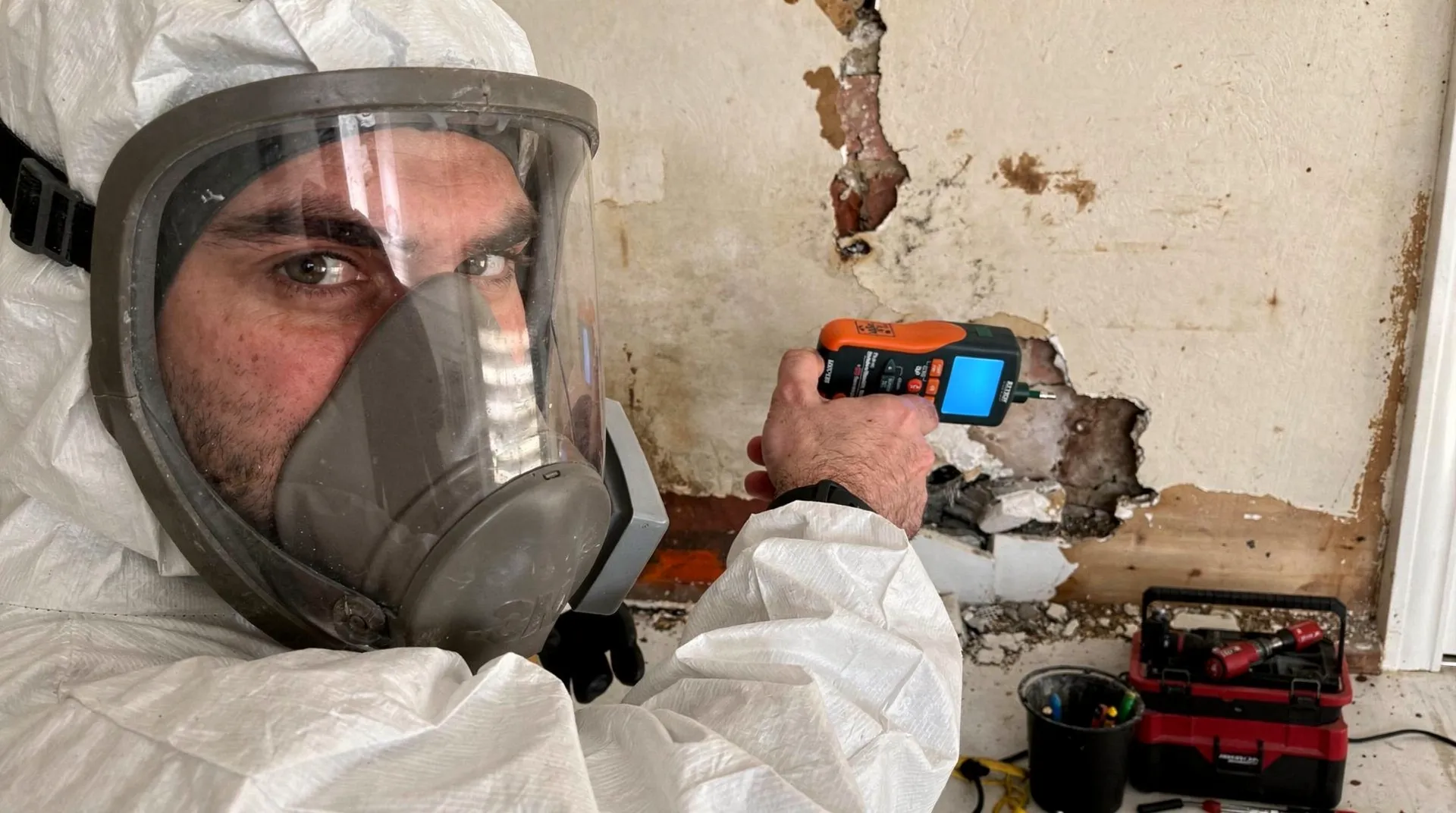
Mold reproduces through microscopic spores invisible to the naked eye. Inhaling those spores triggers health problems ranging from allergic reactions to serious respiratory issues. Homeowners should secure an N-95 respirator mask, protective gloves, and eye goggles before entering any suspected area.
How Does Mold Enter a South Texas Home?
Mold enters residential and commercial properties through multiple pathways that South Texas property owners often overlook. Open doors and windows, clothing brought indoors, and even household pets all serve as carriers for mold spores. Recognizing these entry points is a prerequisite to conducting a thorough, effective inspection.
Prerequisites checklist before beginning any mold inspection:
- N-95 respirator mask or equivalent respiratory protection
- Protective gloves (nitrile or rubber)
- Safety goggles or eye protection
- Disposable coveralls to prevent cross-contamination
- Awareness of all potential spore entry points in the property
DB Integrity, LLC is a family-owned restoration contractor serving South Texas properties. Including residential and commercial clients across the region. That provides professional mold inspection and remediation services for situations where self-inspection reveals a larger problem than expected.
How Do You Spot Visible Mold Signs in Your Home?
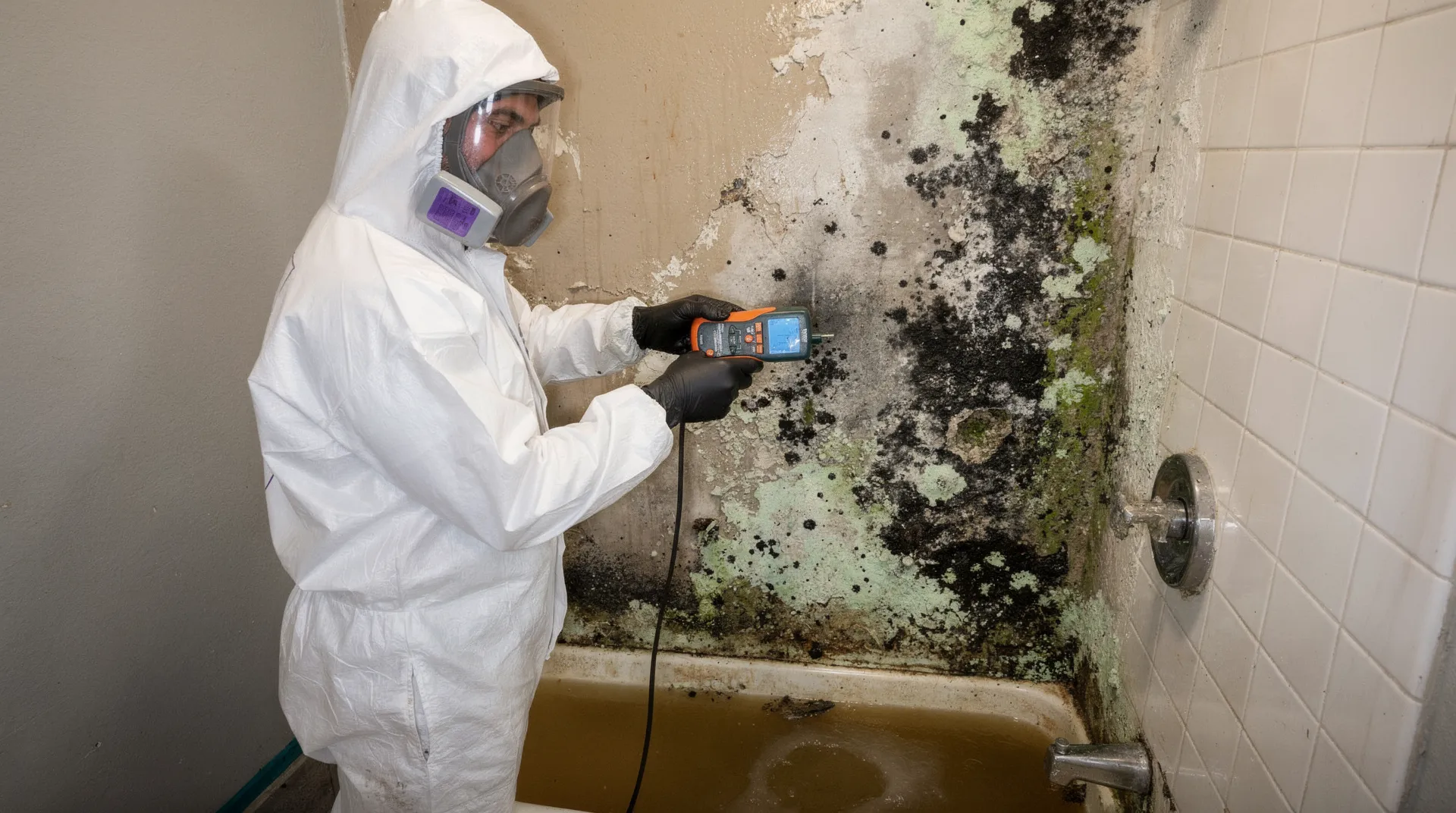
Mold in South Texas homes appears as splotchy patches in a wide range of colors, textures, and forms — fuzzy growths, slimy films, or dust-like coatings. Failing to identify mold early causes hidden colonies to expand for months, creating serious health risks and structural damage that cost far more to remediate.
South Texas homeowners should begin any inspection by checking the locations most prone to moisture accumulation. The region’s high humidity makes the following areas especially vulnerable:
- Shower walls and floors
- Under bathroom and kitchen sinks
- Along windowsills
- Near HVAC vents and air returns
Mold patches in these areas signal active moisture problems that require immediate attention.
Where Does Hidden Mold Grow Inside Walls and Floors?
Hidden mold grows on the backside of drywall, under carpets, inside walls surrounding leaking pipes, and within ductwork. Because these spaces stay concealed, mold colonies develop undetected for months before any visible sign appears at the surface. By the time structural damage becomes apparent, remediation is significantly more complex and costly.
What Does Mold Look Like in High-Humidity Areas?
Mold does not follow a single appearance. Colonies present as fuzzy patches, slimy films, or powdery, dust-like coatings across a broad spectrum of colors. Among the most serious black mold signs home inspectors encounter are dark, slimy patches in high-humidity areas — these warrant immediate professional evaluation. Homeowners who notice discoloration in showers, under sinks. Along windowsills should treat any irregular patch as a potential mold growth. Regardless of color — and arrange a professional inspection promptly.
Mold warning signs checklist — steps to conduct a basic visible mold inspection:
- Gather a flashlight before beginning — adequate lighting is a prerequisite for accurate inspection.
- Examine all shower walls, grout lines, and caulking for splotchy discoloration.
- Open cabinet doors under every sink and inspect the base and back panels.
- Check windowsills and the surrounding wall edges for fuzzy or slimy patches.
- Inspect visible ductwork and vent covers for dust-like growth.
- Contact a qualified South Texas restoration provider — such as DB Integrity, LLC, a Selma, TX-based contractor serving South Texas — when hidden mold in walls, attics, or under flooring is suspected.
How Do You Detect Mold You Cannot See?
Mold in South Texas hides behind walls, under flooring, and inside crawl spaces — often going undetected for months while causing structural damage and health risks. South Texas properties face elevated exposure due to the region’s persistent heat and humidity, which create ideal conditions for concealed mold growth.
What Are the Early Warning Signs of Hidden Mold?
A persistent musty odor or unexplained allergy symptoms. With no other obvious cause — are strong indicators that hidden mold is present. Mold spores are invisible to the naked eye. Means a property can harbor a serious infestation long before any visible discoloration appears. Homeowners and property managers who notice recurring respiratory irritation or a damp smell in enclosed spaces should treat those signals as actionable warnings, not minor inconveniences.
What Conditions Allow Hidden Mold to Develop?
The three primary drivers of hidden mold growth are water leaks, condensation, and elevated humidity levels. All three conditions share a single common factor: moisture. South Texas properties are especially vulnerable because the region’s climate sustains high ambient humidity throughout much of the year, allowing moisture to accumulate in poorly ventilated areas such as attics, wall cavities, and under-slab spaces.
Follow these steps when hidden mold is suspected:
- Identify moisture sources — Inspect plumbing lines, roof penetrations, and HVAC condensate lines for active or past leaks.
- Document symptoms — Record the location and timing of musty odors or allergy flare-ups to help narrow the affected area.
- Limit disturbance — Avoid cutting into walls or disturbing suspected areas before a professional assessment, as disruption spreads spores.
- Schedule a professional inspection — Contact a qualified restoration contractor to conduct a thorough evaluation.
DB Integrity, LLC serves residential and commercial properties across South Texas. Is fully insured to perform mold inspections on both property types. Engaging a certified professional ensures that concealed mold is identified accurately before remediation begins.
What Should You Do After Spotting Mold Signs?
Mold in South Texas demands immediate action: homeowners must clean up the mold and eliminate the underlying moisture source to prevent recurrence. Delaying a response allows mold to spread, escalate health risks, and drive up restoration costs significantly.
Mold produces allergens that trigger hay fever and asthma attacks at minimum. At worst, certain mold types produce toxic compounds that threaten household health. A fast response lessens overall damage, limits further spread, and reduces the total cost of restoration.
What steps should South Texas homeowners take right after finding mold?
Follow these steps in order after identifying mold growth:
- Vacate the affected area — Remove household members, especially children and anyone with respiratory conditions, from the space immediately.
- Stop the moisture source — Identify and shut off any leaking pipes, HVAC condensation points, or water intrusion pathways feeding the mold growth.
- Avoid disturbing the mold — Do not scrub, fan, or vacuum visible mold colonies, as agitation releases spores into the air and spreads contamination.
- Document the damage — Photograph all visible mold and water damage thoroughly before any cleanup begins, as documentation supports insurance claims.
- Contact a licensed remediation contractor — Engage a qualified professional to assess the full extent of mold growth, including hidden areas behind walls or under flooring.
- Notify the insurance carrier — Report the damage promptly, as delays can complicate or reduce claim eligibility.
Does mold remediation in South Texas involve insurance coverage?
Many mold remediation cases in South Texas qualify for homeowner’s insurance coverage, particularly when mold results from a sudden water damage event. DB Integrity, LLC, a Texas state-licensed restoration contractor serving South Texas, provides 24/7 emergency response for mold remediation. Works directly with insurance companies to streamline the claims process for affected property owners.
Understanding the Risks of Indoor Mold Growth
How fast does mold start growing after water damage in South Texas?
Mold begins growing inside walls within 24 to 48 hours if standing water is not removed promptly after flooding, roof leaks, or plumbing failures.
Where does mold hide most often in South Texas homes?
Mold develops most aggressively behind drywall, beneath flooring, and inside crawl spaces. South Texas humidity causes moisture to linger undetected.
What protective equipment do homeowners need before inspecting for mold?
Homeowners need an N-95 respirator mask, protective gloves, and eye goggles before entering any suspected area. Inhaling invisible mold spores triggers allergic reactions and respiratory issues.